

June Is Men’s Health Month: Bringing the Men of Utah’s Mental Health to the Forefront
June is Men’s Health Month, a time to bring attention to the emotional well-being of men across Utah. Mental health concerns such as stress, anxiety, depression, trauma, relationship challenges, and life transitions can affect men at every stage of life. At Gold Counseling, men can find a supportive space to feel heard, build healthy coping skills, and take meaningful steps toward improved mental wellness. For more information, contact us or book an appointment online. We have convenient locations to serve you in South Ogden, Kaysville, Draper, and St. George, UT.
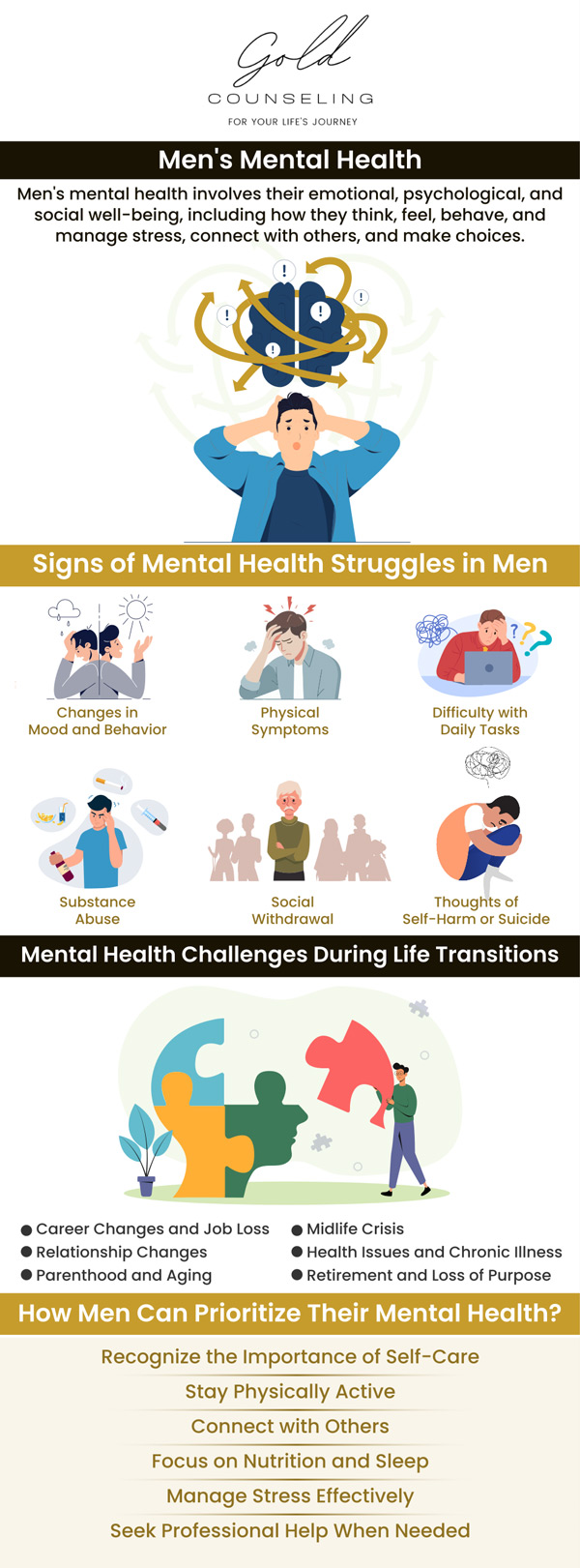
June is Men’s Health Month, and while conversations often focus on physical health, blood pressure, cholesterol, exercise, sleep, and annual checkups, mental health must be part of the same conversation.
For men in Utah, this matters deeply.
Many men are silently carrying stress, depression, anxiety, relationship pain, loneliness, trauma, financial pressure, faith-related shame, and the weight of being the person everyone depends on. Too often, they keep going, keep working, keep providing, and keep saying, “I’m fine.”
But “fine” is not the goal.
Health is the goal.
Connected is the goal.
Alive is the goal.
What Men’s Mental Health Can Look Like
Mental health struggles in men do not always look like sadness or tearfulness. Sometimes they show up in ways that are easy to misunderstand.
For many men, mental health concerns may look like:
- Irritability, anger, or impatience
- Emotional shutdown or withdrawal
- Working constantly to avoid feeling
- Increased alcohol use, pornography use, gaming, spending, or other escape behaviors
- Trouble sleeping or constant fatigue
- Physical symptoms like headaches, stomach issues, or muscle tension
- Pulling away from family, friends, faith, or community
- Feeling like a failure even while appearing successful
- Saying “I’m fine” when something is clearly not fine
Many men have been taught to provide, protect, perform, and push through. While those qualities can reflect strength and responsibility, they can also become a trap when men believe they are not allowed to struggle.
Overlooked Areas of Men’s Mental Health
Depression That Looks Like Anger
Depression in men is often missed because it may not look like classic sadness. It can show up as anger, criticism, numbness, impatience, or isolation.
A man may not say, “I feel hopeless.”
He may say, “Everyone is on my nerves.”
“I just want to be left alone.”
“I don’t care anymore.”
“I’m tired of dealing with everything.”
That is not always a bad attitude. Sometimes it is untreated pain.
Anxiety Hidden Behind Control
Anxiety may show up as overworking, over-planning, perfectionism, financial fear, or needing everything to go the “right” way. In Utah, where family, faith, business, reputation, and responsibility often overlap, many men look highly functional on the outside while feeling overwhelmed on the inside.
They are productive, but exhausted.
Reliable, but resentful.
Capable, but quietly unraveling.
Loneliness and Lack of Real Connection
Many men have people around them but very few emotionally safe relationships. They may have coworkers, neighbors, church connections, or gym friends, but no one who really knows how they are doing.
Loneliness does not always announce itself. It often shows up as disconnection, irritability, boredom, numbness, or escape.
Marriage and Relationship Stress
Many men enter therapy only after their relationship is already in crisis. They may not have been taught how to name emotions, repair conflict, tolerate vulnerability, or ask for reassurance without feeling weak.
Common relationship pain points include:
- Feeling criticized or never good enough
- Avoiding conflict until resentment builds
- Not knowing how to emotionally connect
- Sexual shame, pressure, or disconnection
- Feeling like a paycheck instead of a partner
- Fear of divorce, betrayal, or failure
Men often want connection, but they may not know how to reach for it.
Faith, Shame, and Worthiness Pressure
For some Utah men, mental health is tangled with religious, cultural, or family expectations. They may feel pressure to be spiritually strong, morally disciplined, financially stable, emotionally steady, and relationally available all at once.
When they struggle, shame may sound like:
“I should be stronger.”
“I should have more faith.”
“I should be able to fix this.”
“I’m failing my family.”
That shame keeps men quiet. And silence can be dangerous.
Trauma That Was Never Called Trauma
Many men were taught to minimize painful experiences. Childhood emotional neglect, bullying, abuse, divorce, betrayal, accidents, military exposure, religious wounds, father wounds, or sexual shame may have been brushed off with, “It wasn’t that bad.”
But the nervous system often remembers what the mind tries to dismiss.
Unprocessed trauma may show up years later as anger, control, avoidance, emotional numbness, panic, addiction, or relationship disconnection.
What Needs to Be Brought to the Forefront
Men’s mental health needs to be discussed earlier, more directly, and with less shame.
We need to say clearly:
Mental health care is not a weakness.
Therapy is not a failure.
Asking for support is not falling apart.
Emotional health is part of being a healthy man.
Men do maintenance on trucks, homes, equipment, finances, businesses, and their bodies. Mental health deserves the same respect.
The goal is not to make men less strong. The goal is to help men stay grounded, connected, honest, and alive.
Pain Points That Keep Men From Getting Help
Many men wait too long to get support because of internal and cultural barriers.
They may think:
- “I should be able to handle this.”
- “Other people have it worse.”
- “I don’t want to burden anyone.”
- “Therapy is for people who can’t cope.”
- “I don’t know what I would even say.”
- “If I open this up, I may not be able to shut it back down.”
There are also practical barriers: busy work schedules, cost concerns, privacy worries, fear of judgment, or not knowing how to find the right therapist.
Some men also worry therapy will be vague, emotional, or unstructured. That matters. Many men do better when therapy is practical, direct, respectful, goal-oriented, and connected to real-life change.
What Men Need to Make Mental Health a Priority
Men often engage more fully when mental health is connected to what matters most to them.
They may come to therapy because they want to:
- Be a better father
- Improve their marriage
- Stop losing your temper
- Sleep better
- Stop feeling numb
- Feel like themselves again
- Break patterns from their own childhood
- Manage work and financial stress
- Build healthier relationships
- Find purpose again
The entry point does not have to be, “I need therapy.”
Sometimes it starts with, “I want my life to work better.”
That is enough.
Starting Small Counts
A man does not have to tell his whole life story in the first session. He does not have to have the perfect words. He does not have to fully understand what is wrong.
Starting can be as simple as saying:
“I’m more angry than I want to be.”
“I’m exhausted.”
“My marriage is struggling.”
“I don’t feel like myself.”
“I don’t know what’s wrong, but something is off.”
That is a beginning.
And beginnings matter.
How Loved Ones Can Help
Men are more likely to seek help when the people around them normalize support instead of shaming their struggles.
A spouse, friend, adult child, parent, employer, or faith leader can say:
“I don’t think you’re weak. I think you’ve been carrying too much alone.”
That one sentence can open a door.
We can also help by noticing the signs: withdrawal, anger, hopelessness, increased substance use, major sleep changes, reckless behavior, or comments like, “Everyone would be better off without me.”
When suicide is a concern, ask directly. It may feel uncomfortable, but direct questions can save lives.
If someone is in immediate crisis, call or text 988 for the Suicide & Crisis Lifeline. If there is imminent danger, call 911 or go to the nearest emergency room.
A Message to Men
You can be strong and still need support.
You can love your family and still feel overwhelmed.
You can be successful and still feel empty.
You can have faith and still need therapy.
You can be the one people depend on and still deserve someone to help carry the weight.
This June, let’s bring men’s mental health out of the shadows. Men deserve space to be honest, supported, challenged, and equipped with tools that help.
Whether the concern is anger, burnout, marriage stress, anxiety, depression, trauma, faith-related pressure, or simply feeling disconnected from yourself, therapy can help you take the next right step.
You do not have to wait until everything falls apart to get support.
Gold Counseling Is Here to Help
At Gold Counseling, we believe men deserve care that is respectful, practical, direct, and compassionate. Our therapists help men address stress, relationships, trauma, anxiety, depression, anger, faith concerns, parenting, life transitions, and emotional disconnection.
Mental health is part of men’s health.
And taking care of it is not a weakness.
It is wisdom.
Reach out today to schedule with a therapist who can help you or someone you love to take the next step.
Check Out Our 5 Star Reviews



Additional Services You May Need
▸ Relationship Counselling
▸ Couples Counselling
▸ Individual Therapy
▸ EMDR Therapy
▸ Spiritual Healing
▸ Disordered Eating
▸ LGBTQIA+ Therapy
▸ Group Psychotherapy
▸ Life Coaching Therapist
▸ Depression Treatment
▸ Mental Health Clinic
▸ Life Transition Therapy
▸ Telehealth Counseling
▸ Cognitive Behavioral Therapy (CBT)
▸ Dialectic Behavioral Therapy (DBT)


 Send Text
 How May I Help You?