

Meet Braiden Hustead, CMHCi, at Gold Counseling in St. George.
Braiden specializes in working with veterans, first responders, and their families, as well as adolescents and adults navigating PTSD and complex trauma, ADHD, grief and loss, anxiety, depression, and life transitions. With 15 years of military service and extensive experience supporting veterans and first responders, Braiden brings a unique understanding of trauma, reintegration into civilian life, and the challenges that can come with finding identiy, purpose, and meaning. His therapeutic approach incorporates Cognitive Behavioral Therapy (CBT), Internal Family Systems (IFS), somatic and mindfulness-based approaches, Motivational Interviewing, and Cognitive Processing Therapy (CPT). Braiden is passionate about helping clients build self-awareness, regain a sense of autonomy, and develop the tools and resilience needed to move forward in their lives. For more information, contact us or book an appointment online. We are conveniently located at 1173 S. 250 W., Suite 501, St. George, UT 84770. Braiden serves clients near St. George, UT, telehealth throughout Utah, Arizona, Nevada and Idaho.
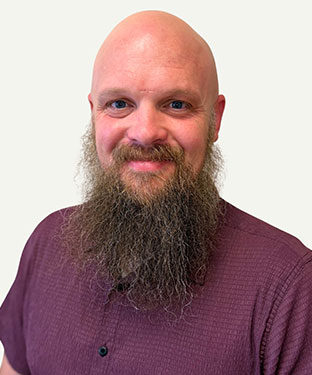
BRAIDEN HUSTEAD, CMHCi
Adults, Adolescents, Children (10+), College Students, Couples, Families, First Responders, & Veterans/Military
Anxiety, ADHD, Adult Moral Injury, Autism Spectrum Disorder (ASD), Autism, Combat & Complex PTSD (CPTSD), Communication, Depression, Family Dysfunction, Grief & Loss, Life Transitions, PTSD, Reintegration into Civilian Life, Relationship Issues, Religious & Spiritual Issues, Trauma
Table of Contents:
What led Braiden to his career in mental health counseling?
What work experience and populations does Braiden serve?
What areas does Braiden specialize in?
What techniques do I use to achieve my own positive mental health?
My hobbies, interests, and fun facts about me:
My therapeutic approach and philosophy:
Braiden’s journey to counseling began long before he recognized it as one. A lifelong learner with a deep commitment to protecting freedom – both his own and others’ – he first found that path in the military, hard ground that shaped his endurance and confidence. During that time, he also earned undergraduate degrees in Chinese and Russian from the University of Utah and the Defense Language Institute. Along the way, he experienced challenges with loss, pain, trauma, and grief, each of which deepened his compassion for others.
In time, that compassion turned inward, toward the personal work he needed to do for himself and ultimately motivated him to pursue a master’s degree in clinical mental health counseling at Walden University. Through this journey, he came to see that life’s terrain is rarely simple – often filled with hardship and beauty – but always possible to move through. That realization is what brought him back, not just to walk his own path, but to walk alongside others on theirs.
Braiden served 15 years in the military (two years in the Air Force and thirteen in the Army) and has dedicated the last two years volunteering as a classroom lead instructor and mentor with Save A Warrior, an international men’s mental health community. In that role, he has led over 300 first responders and veterans through intensive programs addressing suicidal ideation, addiction, and PTSD. Between this, he spent time in teaching and case management, work that further shaped his understanding of the populations he now serves. Alongside his clinical training, Braiden has spent years coaching competitive swimming, which has helped him develop motivational leadership and mentorship experience that continues to inform how he shows up for clients.
Braiden is trained in Motivational Interviewing (MI) and has worked extensively with Internal Family Systems (IFS) and elements of Mind-Body Bridging (MBB). He is also pursuing further certification and training in Accelerated Resolution Therapy (ART) and Cognitive Processing Therapy (CPT).
One practice that keeps me grounded is “Warrior Meditation”, a technique developed through the Save A Warrior program. It moves through three phases: bilateral stimulation, breathwork, and stillness; but the heart of it, for me, is what happens when a thought inevitably shows up – I don’t fight it or try to control it. I just acknowledge it. Internally, I repeat the same phrase every time, “Acknowledged. Thank you.” – This daily practice clarifies my perceptions on hyper-vigilance, rumination, and self-critical thoughts and it’s given me a way back to what I’m actually feeling underneath all that noise.
I rarely meet an idea – a craft, a business scheme, a skill, a recipe – that my curiosity and bravado don’t override my better judgment on. This has resulted in a rather extensive Pinterest board of “future great ideas” and a garage full of half-finished attempts to bring them to life.
Geography and languages have always pulled at me; I hold degrees in Mandarin Chinese and Russian, and I could talk for hours about the different ways people around the world have come to explain and make sense of their lives. Hong Kong and Seoul are some of my favorite places to live in and visit.
Outside of being with my beautiful family, or working (optimistically) on my house remodel, you’ll most likely find me poolside, coaching competitive high school swimming or working with Goose, my aspiring therapy-dog-in-training.
“I believe that, at any given time, each person is doing the best they can according to their learning and resources. This isn’t an excuse or rationalization; it is a declaration of compassion that can create a space where accountability and growth can take place. Sometimes, the learning and resources we’ve developed feels incomplete or less-effective at helping us thrive in the way we want – sometimes, it may be the very thing keeping us stuck. This doesn’t make us wrong, broken, or bad; but gives us a direction where we can go to work! I enjoy working collaboratively with clients to uncover these “stuck” or incomplete areas to regain autonomy and build empowerment within their lives.”


 Send Text
 How May I Help You?