

Dialectical Behavior Therapy in Riverdale, UT
Dialectical Behavior Therapy (DBT) in Riverdale, UT, offers a powerful approach to managing emotions and improving mental health. Our team at Gold Counseling provides DBT to help individuals develop essential skills in emotional regulation, mindfulness, and distress tolerance. This therapy is particularly effective for those dealing with mood disorders, anxiety, and relationship challenges. Through a structured and supportive environment, our team guides you in building healthier coping mechanisms and improving interpersonal effectiveness. For more information, contact us or book an appointment online. We are conveniently located at 5129 S 1500 W, Riverdale, UT 84405.
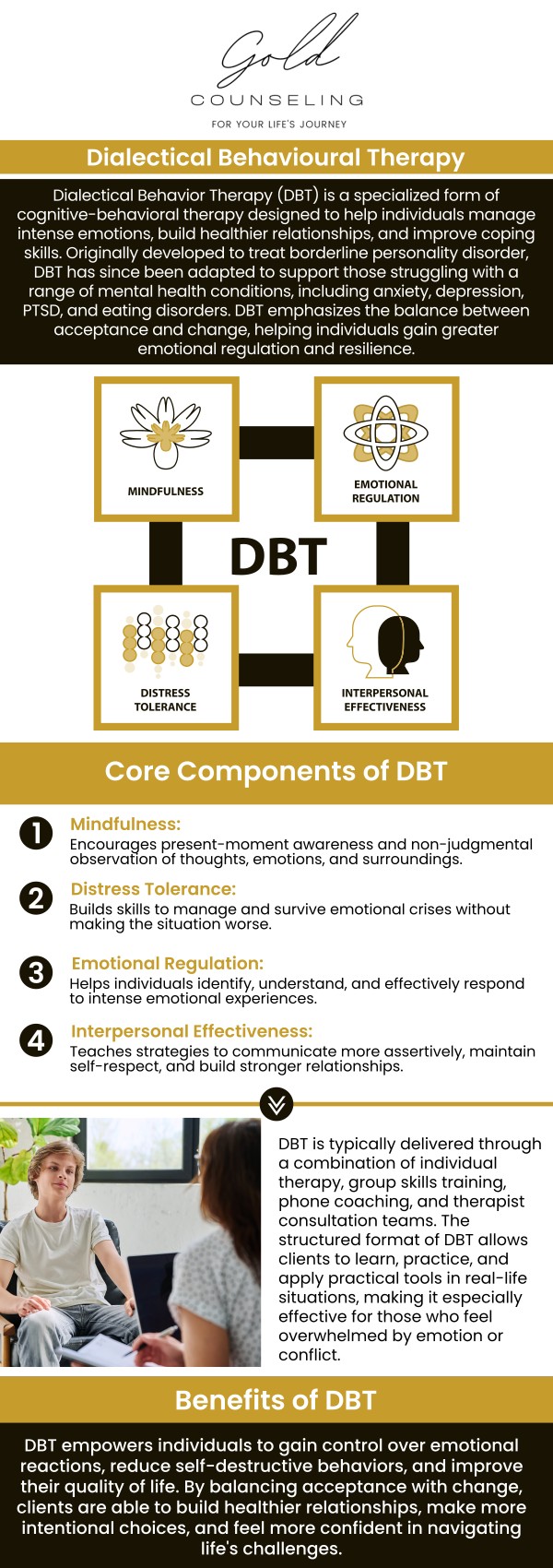
Table of Contents:
What is mindfulness in DBT?
How does DBT help with emotional regulation?
What is distress tolerance in DBT?
Is DBT effective for treating substance abuse?
Transformative Emotional Skills in Riverdale
At Gold Counseling, we recognize the transformative power of mindfulness as a foundational component of Dialectical Behavior Therapy (DBT). Mindfulness means guiding our clients to pay purposeful, non-judgmental attention to the present moment, which is a vital step in fostering genuine self-awareness and emotional growth.
Our therapists incorporate mindfulness exercises and strategies into personalized treatment plans, helping clients become more attuned to their thoughts, emotions, and bodily sensations as they arise. By learning to observe these internal experiences without judgment or immediate reaction, clients can break free from cycles of worry about the past or anxiety about the future.
We teach mindfulness as a practical skill set, empowering individuals to notice and accept what is happening both within themselves and in their surroundings with clarity and openness. This allows our clients to respond to life’s challenges with greater intention and wisdom, rather than reacting impulsively or out of habit.
By prioritizing mindfulness in our DBT approach, we support clients in managing distress, improving relationships, and achieving lasting emotional balance. We believe that this mindful, non-judgmental awareness is not only essential for effective therapy but also for living a more fulfilling and resilient life.
Our DBT program is designed to teach practical skills that help clients handle overwhelming emotions more effectively. Our experienced and compassionate therapists guide clients through mindfulness practices, which serve as the foundation for building greater awareness of emotional experiences. By learning to observe emotions without judgment, clients gain crucial insight into what they are feeling and why—an essential first step toward emotional control.
Our clinicians work closely with clients to develop individualized strategies for coping with distressing emotions. Through DBT, clients learn distress tolerance skills, such as self-soothing, distraction, and radical acceptance. These tools help individuals navigate emotional crises without turning to harmful behaviors, ensuring safety and long-term emotional health.
A key component of DBT is helping clients identify and challenge unhelpful thought patterns that contribute to emotional dysregulation. Our therapists help clients examine the connections between their thoughts, feelings, and actions, empowering them to replace negative beliefs with healthier, more adaptive perspectives.
We recognize that relationships play a vital role in emotional well-being. That’s why DBT includes training in interpersonal effectiveness—teaching clients how to communicate their needs assertively and set healthy boundaries. These skills help reduce conflicts and misunderstandings, which are often significant sources of emotional distress.
We understand that facing intense emotions and distressing situations can feel overwhelming. That’s why we integrate evidence-based approaches like Dialectical Behavior Therapy (DBT) into our work with clients. A core component of DBT, and a skill we often help our clients develop, is distress tolerance.
Distress tolerance refers to a set of practical strategies and skills that empower individuals to endure emotional pain or crisis moments without resorting to behaviors that might make things worse—such as self-harm, substance misuse, or angry outbursts. Rather than trying to immediately eliminate uncomfortable feelings, our therapists at Gold Counseling guide clients in learning how to accept and manage distress in healthy, constructive ways.
For many of our clients, distress tolerance skills become essential tools for navigating challenging situations and overwhelming emotions. Through our tailored counseling sessions, we teach clients how to pause, acknowledge their emotional state, and access coping strategies such as distraction, self-soothing, and radical acceptance (fully accepting reality without judgment).
By practicing distress tolerance, clients build emotional resilience and learn to handle crisis moments more safely and effectively. This not only helps prevent immediate negative consequences but also fosters long-term emotional stability and well-being.
At Gold Counseling, we are committed to providing evidence-based therapies that address the complex challenges our clients face, including substance use disorders. One highly effective approach we offer is Dialectical Behavior Therapy (DBT). Originally developed for borderline personality disorder, DBT has proven to be a valuable treatment for a range of mental health concerns, including substance abuse.
Our clinicians utilize DBT to help clients who struggle with substance use, especially when emotional dysregulation, self-harm, or co-occurring mental health issues are present. DBT for substance use (sometimes called DBT-S) integrates the foundational elements of DBT—mindfulness, distress tolerance, emotion regulation, and interpersonal effectiveness—with targeted strategies to address substance-related behaviors. This means we work collaboratively with clients to:
– Reduce substance use and harmful behaviors
– Increase motivation and commitment to sobriety
– Identify and manage triggers and cravings
– Build coping skills for high-risk situations
– Foster acceptance while supporting meaningful change
Research consistently shows that DBT can reduce substance use, improve retention in treatment programs, and decrease the severity of co-occurring psychiatric symptoms. At Gold Counseling, we have seen firsthand how DBT provides hope and practical tools for individuals facing both addiction and complex emotional or behavioral challenges.
If you’re seeking a structured and effective therapy to regain control over your life, Dialectical Behavior Therapy (DBT) at Gold Counseling near Riverdale, UT, is your solution. Our professional team utilizes DBT to empower clients to move out of crisis and build healthier relationships. We focus on practical, concrete skill-building through both individual therapy and group training, ensuring clients have the tools they need to tolerate distress and regulate intense feelings in real-time. Gold Counseling is dedicated to helping you achieve emotional freedom and a greater sense of purpose.
We understand that every individual’s journey is unique. That’s why Gold Counseling tailors DBT interventions to fit each client’s needs, including the severity of addiction and any co-occurring mental health concerns. Success with DBT depends on a strong therapeutic partnership and comprehensive support—both of which are cornerstones of our practice. For more information, contact us or book an appointment online. We serve patients from Riverdale UT, Washington Terrace UT, Clinton UT, Kaysville UT, Clearfield UT, Farmington UT, Draper UT, Riverton UT, Sandy UT, St. George UT, Bloomington UT, Santa Clara, UT, and surrounding areas.
Check Out Our 5 Star Reviews



Additional Services You May Need
▸ Relationship Counselling
▸ Couples Counselling
▸ Individual Therapy
▸ EMDR Therapy
▸ Spiritual Healing
▸ Disordered Eating
▸ LGBTQIA+ Therapy
▸ Group Psychotherapy
▸ Life Coaching Therapist
▸ Depression Treatment
▸ Mental Health Clinic
▸ Life Transition Therapy
▸ Telehealth Counseling
▸ Cognitive Behavioral Therapy (CBT)
▸ Dialectic Behavioral Therapy (DBT)


 Send Text
 How May I Help You?