

Father’s Day and Men’s Mental Health: Honoring the Men Who Carry So Much
This Father’s Day, we recognize and honor the men who carry so much—fathers, mentors, caregivers, and every man who provides guidance, support, and strength to those around him. At Gold Counseling, we understand that the pressures men face can be immense, and mental health is just as important as the care they give to others. Today, we celebrate the resilience, dedication, and compassion of men while encouraging open conversations about emotional well-being, self-care, and the support every man deserves. Your efforts are seen, valued, and deeply appreciated—not just today, but every day. For more information, contact us or book an appointment online. We have convenient locations to serve you in South Ogden, Kaysville, Draper, and St. George, UT.
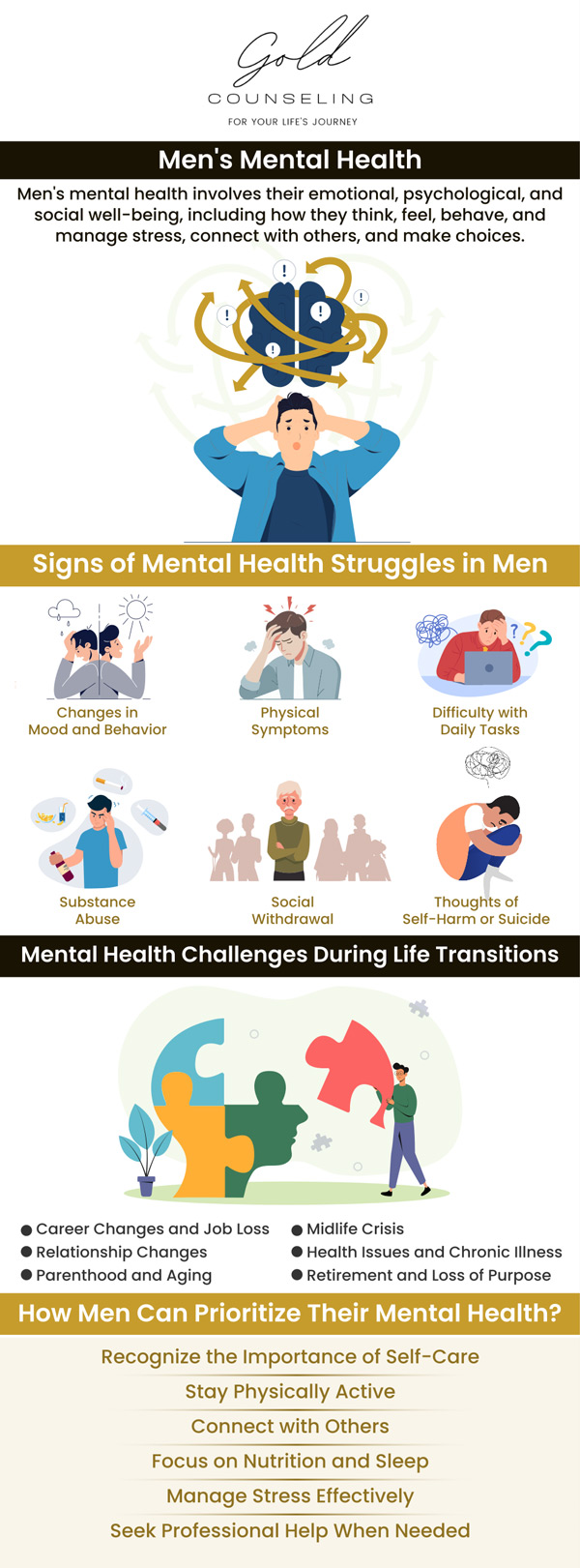
Father’s Day is often filled with cards, meals, gifts, and appreciation. And those things matter. But this year, it may be worth asking a deeper question:
How are the fathers, husbands, grandfathers, sons, brothers, and father figures in our lives really doing?
Many men carry enormous emotional weight quietly. They may be providing, leading, working, parenting, fixing problems, showing up for others, and still feeling exhausted, disconnected, lonely, or unsure how to talk about what is happening inside.
For many men, mental health struggles do not always look like obvious sadness. They may look like irritability, emotional distance, anger, overworking, shutting down, loss of motivation, numbing out, or saying, “I’m fine” when they are not fine at all.
This Father’s Day, we can honor men not only for what they do, but for who they are, human beings with emotional needs, relational needs, and mental health needs.
When Men Are Struggling, It May Not Look Like Depression
Many men were never taught to slow down and name what they feel. They were taught to be strong, dependable, capable, productive, and useful. Those are good qualities, until they become a cage.
Men may not say, “I feel depressed.”
They may say:
“I’m just tired.”
“Nothing is wrong.”
“I don’t want to talk about it.”
“I’m stressed.”
“I’ll handle it.”
“I don’t know what you want from me.”
“I just need everyone to back off.”
Depression, anxiety, and burnout in men can show up as anger, withdrawal, criticism, restlessness, fatigue, numbness, disconnection, or increased use of work, alcohol, screens, food, pornography, or busyness to cope.
The message men need is not, “What is wrong with you?”
The better message is, “You do not have to carry this alone.”
Fatherhood Can Be Meaningful and Heavy
Fatherhood can bring deep purpose, love, pride, and connection. It can also bring pressure, fear, inadequacy, exhaustion, and loneliness.
Many fathers feel responsible for everyone else’s well-being. They may worry about money, marriage, children, work, faith, extended family, aging parents, health, discipline, and whether they are doing enough.
And many men are quietly asking themselves questions they rarely say out loud:
Am I a good enough father?
Am I failing my family?
Do my kids know I love them?
Can I keep up with everything expected of me?
Why do I feel so alone when I have people around me?
Why am I so angry, tired, or disconnected?
How do I fix my marriage, my stress, or myself?
A good father is not the man who never struggles.
A good father is the man who is willing to grow, repair, learn, and stay connected.
Loneliness Is One of the Most Overlooked Issues for Men
Many men are surrounded by people but still emotionally alone.
They may have coworkers, neighbors, family members, church connections, gym friends, or people they serve, but few relationships where they can honestly say, “I am not okay.”
Surface-level connection is not the same as emotional support.
Men need places where they can be real without being mocked, judged, corrected, dismissed, or immediately told how to fix it. They need relationships where they are valued beyond what they produce, provide, or solve.
This Father’s Day, one of the greatest gifts we can give men is permission to be human.
Not just strong.
Not just useful.
Not just dependable.
Human.
Relationship Distress Often Shows Up as Shutdown
Many men care deeply about their relationships but do not always know how to show it in the way their partner or family needs.
When emotional conversations become intense, some men shut down. Others get defensive. Some try to fix the problem too quickly. Some withdraw because they feel like they are already failing.
This can create painful relationship patterns:
One person pursues.
The other withdraws.
One person criticizes.
The other defends.
One person asks for connection.
The other hears, “You are not enough.”
Over time, both people feel alone.
Men often need help building emotional language, repair skills, vulnerability, stress regulation, and relational confidence. These are not personality flaws. They are skills that can be learned.
Therapy can help men move from shutdown to connection, from anger to understanding, from silence to honesty, and from defensiveness to repair.
Daily Ways Men Can Care for Their Mental Health
Mental health does not always require a dramatic life overhaul. Sometimes the most powerful changes are small, consistent, and honest.
Here are doable daily practices for men:
1. Name what you are feeling once a day
Instead of saying, “I’m fine,” try getting more specific.
Ask yourself:
What am I feeling today?
Am I angry, tired, sad, anxious, numb, embarrassed, lonely, overwhelmed, or discouraged?
What do I need that I am not saying?
You do not have to perfectly understand the feeling. You must stop ignoring it.
2. Take a 10-minute reset before reacting
If you feel yourself getting angry, defensive, or shut down, pause before responding.
Try:
“I need 10 minutes. I want to come back to this better.”
“I am getting overwhelmed, but I am not leaving the conversation.”
“I want to respond, not react.”
This protects relationships and helps the nervous system settle.
3. Move your body
A walk, gym session, bike ride, stretching, yard work, or even 10 minutes outside can help regulate stress. Movement is not a cure-all, but it is one of the simplest ways to help the body discharge pressure.
Think of it as clearing emotional cache. Even phones need updates. Men do too.
4. Have one honest conversation
Every day, practice saying one honest thing.
Examples:
“I have been more stressed than I realized.”
“I am not mad. I am overwhelmed.”
“I miss feeling close to you.”
“I need encouragement, not advice right now.”
“I am having a hard day.”
“I do not know how to explain it, but I want to try.”
Honesty builds connection.
5. Reduce numbing behaviors
Pay attention to the things you use to avoid feeling.
That may include alcohol, screens, work, food, pornography, gambling, shopping, anger, isolation, or constant busyness.
The goal is not shame. The goal is awareness.
Ask: “Is this helping me recover, or helping me avoid?”
6. Repair quickly
You will not always get it right. No father, partner, or man does.
But repair matters.
Try:
“I came across harsher than I meant to.”
“I shut down. I want to try again.”
“I am sorry I snapped.”
“That was not fair to you.”
“I love you, and I want to handle this better.”
Repair is one of the strongest signs of emotional maturity.
7. Let someone support you
Pick one person you can be more honest with. A spouse, friend, sibling, therapist, mentor, pastor, coach, or trusted family member.
Men do not need a hundred people. They often need one safe place to start.
8. Get help before crisis
Therapy is not only for breakdowns. It is for maintenance, growth, skill-building, stress management, marriage repair, parenting support, and emotional clarity.
You do not have to wait until the wheels fall off. That is not strength. That is expensive towing.
How Families Can Support and Honor Fathers
Supporting men does not mean excusing harmful behavior, ignoring accountability, or pretending everything is okay. Real support honors both compassion and responsibility.
Here are meaningful ways families can support fathers and father figures:
1. Ask better questions
Instead of only asking, “Are you okay?” try:
“What has felt heavy lately?”
“What do you wish people understood about what you carry?”
“What kind of support would actually help?”
“What has been draining you?”
“What helps you feel respected and connected?”
“What do you need more of right now?”
Better questions create better conversations.
2. Appreciate who he is, not just what he does
Many men are thanked for providing, fixing, working, paying, solving, and showing up. That matters. But men also need to be valued for their character.
Try saying:
“I appreciate your steadiness.”
“I see how hard you are trying.”
“You matter to us beyond what you do.”
“I respect the way you keep showing up.”
“I love who you are, not just what you provide.”
3. Create space without forcing vulnerability
Some men need time to open up. Pressure can make them shut down more.
Instead of demanding, “Talk to me right now,” try:
“I care about you. I am here when you are ready.”
“I do not need you to have perfect words.”
“I would rather hear the messy version than have you carry it alone.”
4. Give practical support
Sometimes emotional support looks practical.
Offer:
A quiet morning
A walk together
Time away from responsibilities
Help with a task
A planned meal
A break from decision-making
Encouragement to schedule therapy
A sincere thank-you
A conversation without criticism
Time with children that is joyful, not task-based
Many fathers are tired of being needed only for logistics. Give them connection, not just another assignment.
5. Encourage friendship and healthy outlets
Support men in having healthy friendships, movement, hobbies, therapy, mentoring, spiritual support, or time outdoors.
A man having time to recover is not selfish. It is protective.
6. Notice warning signs
If a man becomes increasingly withdrawn, hopeless, angry, reckless, numb, substance-dependent, or starts talking about being a burden, not wanting to be here, or feeling trapped, take it seriously.
Do not minimize it. Do not assume he will “snap out of it.”
Ask directly and compassionately:
“Are you thinking about hurting yourself?”
“Do you feel safe right now?”
“Can I stay with you or help you get support?”
If there is immediate danger, call 988, 911, or go to the nearest emergency room.
This Father’s Day, Give Men More Than a Gift
Give appreciation.
Give respect.
Give connection.
Give patience.
Give honesty.
Give encouragement.
Give room to be human.
And to the fathers and father figures reading this:
You are allowed to need support.
You are allowed to be tired.
You are allowed to want more connection.
You are allowed to learn new skills.
You are allowed to ask for help.
You are allowed to be more than the role you perform for everyone else.
You do not have to carry everything alone.
This Father’s Day, let’s honor men not by pretending they are invincible, but by supporting them as whole people.
Gold Counseling is here to help men, fathers, couples, and families build healthier patterns, stronger relationships, and more honest connection.
Written by: Debee Gold, LCSW
Check Out Our 5 Star Reviews



Additional Services You May Need
▸ Relationship Counselling
▸ Couples Counselling
▸ Individual Therapy
▸ EMDR Therapy
▸ Spiritual Healing
▸ Disordered Eating
▸ LGBTQIA+ Therapy
▸ Group Psychotherapy
▸ Life Coaching Therapist
▸ Depression Treatment
▸ Mental Health Clinic
▸ Life Transition Therapy
▸ Telehealth Counseling
▸ Cognitive Behavioral Therapy (CBT)
▸ Dialectic Behavioral Therapy (DBT)


 Send Text
 How May I Help You?